Introduction
E-commerce has evolved from being a convenience to a lifestyle. Today’s customers no longer just browse; they expect to be understood. The future of AI in eCommerce represents the next major evolution in this digital journey, where artificial intelligence transforms online stores into intelligent ecosystems that think, respond, and adapt like humans. Every click, search, and pause on a website becomes a data signal a tiny window into customer intent. When interpreted correctly using AI, these signals build a picture of who the customer is, what they need, and what emotion drives their decision.
This is where Aidify Learning and Mobility steps in, empowering brands to use AI not just as a tool, but as a digital companion for personalisation, prediction, and emotional understanding. We believe personalisation is not just about “selling more”; it’s about “understanding better.” And as the future of AI in eCommerce unfolds, the brands that win will be those who make customers feel seen and valued.
The Evolution: From Static Shopping to Smart Personalisation
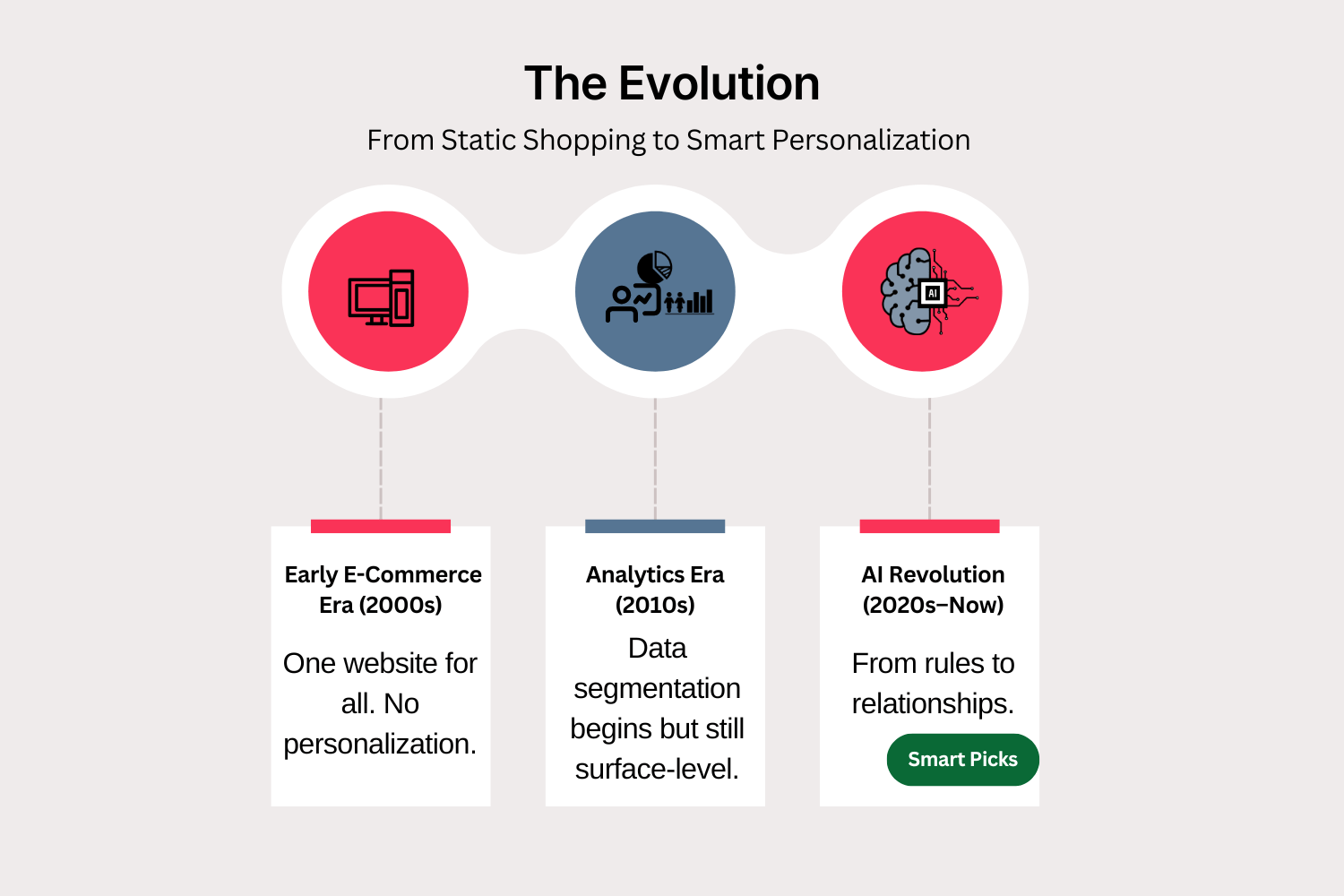
1. The Early E-Commerce Era – One Store for All
In the early 2000s, online shopping was revolutionary but simple. Everyone saw the same website, same deals, same experience. There was no personalisation, no recognition of who the buyer was.
- Emails were generic.
- Recommendations were static.
- Shopping experiences were one-size-fits-all.
Personalisation was limited to “related products,” often irrelevant and purely rule-
based.
“We see our customers as guests at a party, and we are the hosts.
Personalisation and anticipating their needs are what will make the e-commerce experience remarkable.”
—Jeff Bezos (Founder, Amazon)
2. The Analytics Era – Data Enters the Game
As data analytics tools emerged, eCommerce brands began segmenting users by demographics age, gender, or region.
For example, A female user aged 25–35 from Mumbai might see beauty product recommendations, while a male user aged 40–50 in Delhi would see gadgets or office accessories. It was a step forward but still shallow personalisation based on assumptions, not insights.
3. The AI Revolution – From Rules to Relationships
The future of AI in e-commerce truly began in the 2020s. Machine learning, neural networks, and predictive analytics started transforming how brands understood their users. AI began analysing behavioural patterns, purchase intent, and even emotions in real time. Now, personalisation wasn’t just about “what you bought” it became about why you bought it, when you might need it again, and how you felt about it.
At Aidify Learning and Mobility, we saw this shift as the foundation of a new eCommerce philosophy:
“When data meets empathy, personalisation becomes powerful.”
The Present: How AI Personalization Works Today
Today’s AI-powered personalisation is an intricate mix of psychology, data science, and automation. Here’s how it works in modern eCommerce systems and how Aidify Learning and Mobility enhances it with our proprietary AI frameworks:
1.
Data Collection – Understanding Every Micro-Interaction
AI collects both explicit data (what the user says or does) and implicit data (what the user feels or hints at).
- Explicit data: Search terms, product clicks, and add-to-cart actions.
- Implicit data: Time spent on pages, scroll depth, abandoned carts, or emotional tone in chat queries.
We at Aidify Learning and Mobility do this through advanced data mapping, capturing micro-moments and turning them into insights.
For example, If a user frequently views eco-friendly products but never buys plastic items, our AI
automatically categorises them as a “sustainability-focused shopper.” This allows the brand to show only relevant, eco-friendly recommendations.
2.
AI Analysis – Decoding Intent, Predicting Behavior
The heart of personalisation lies in understanding intent. AI models analyse browsing history, seasonal trends, and peer behaviour to predict what a customer will do next.
Example: If a customer buys running shoes, AI can predict that within 30 days, they may look
for fitness wearables or protein supplements.
At Aidify Learning and Mobility, we use deep learning models that forecast purchasing patterns with 95% predictive accuracy. Our system learns not just from what the user did, but from what thousands of similar users have done before.
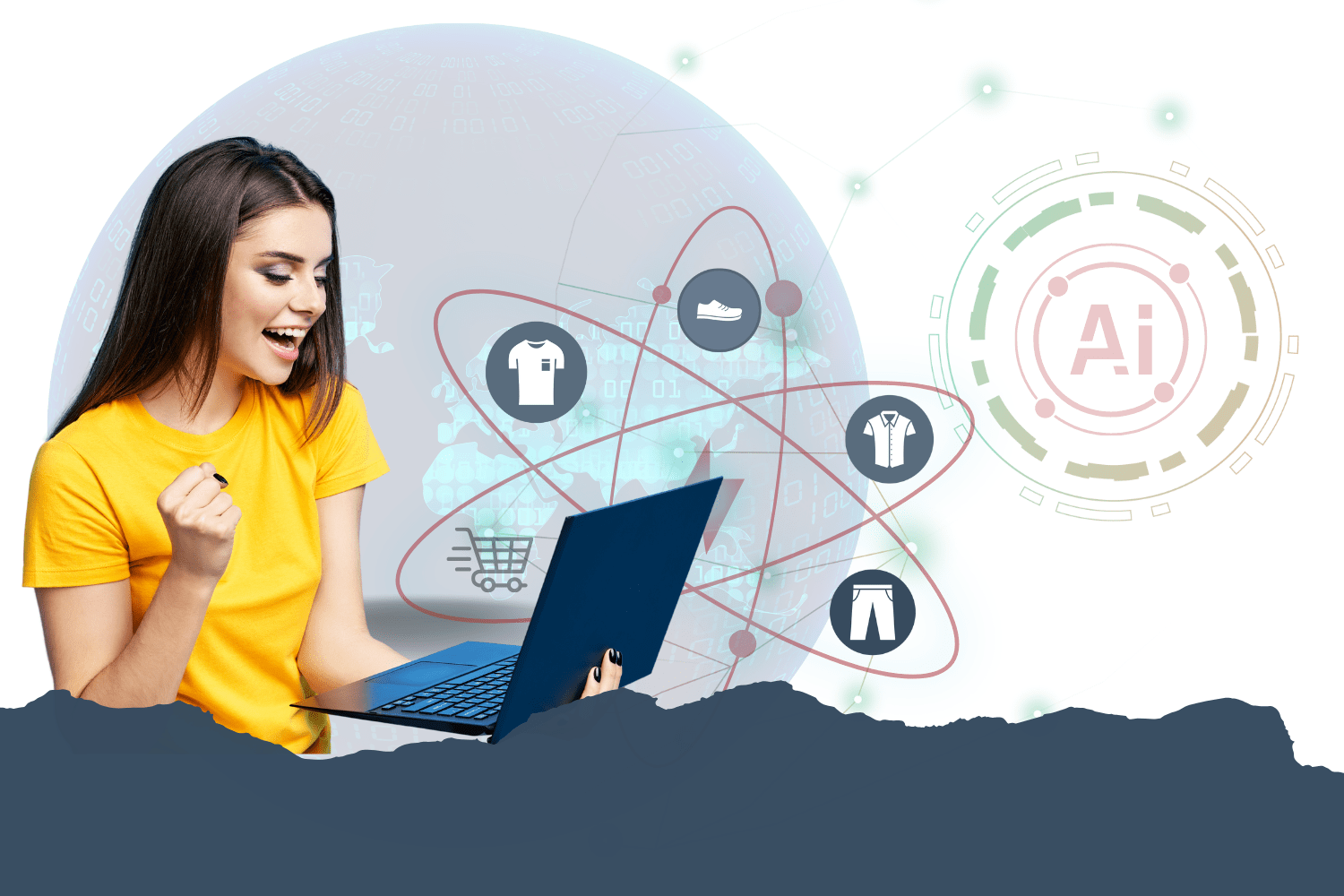
Real-Time Personalisation – Creating Unique Experiences for Every User
Real-time personalisation is the process of dynamically adapting the shopping experience for each individual as they interact with your website, app, or digital platform. Unlike static recommendations or batch email campaigns, real-time personalisation reacts instantly to user behaviour, context, and intent, providing a tailored experience that feels personal and timely.
At Aidify Learning and Mobility, we implement this through our CueLab personalisation engine, which uses machine learning algorithms to continuously analyse user interactions and deliver contextually relevant content, offers, and product suggestions.
1. User Behavior Tracking in Real Time
- CueLab monitors every interaction a user makes: clicks, scrolls, hover time, searches, cart additions, and even pauses.
- This data provides insights into intent.
For example, lingering on a product page may indicate interest, while repeated visits without purchase may indicate hesitation.
2. Dynamic Product Recommendations
Once intent is detected, CueLab instantly adjusts the content displayed to the user. Product pages adapt based on behaviour:
- The most relevant items are moved to the top of the page.
- Complementary products are suggested next to the primary item.
- Trending or “popular with similar users” items are highlighted.
3. Customized Communication
- Emails, push notifications, and in-app messages are automatically personalised in real time.
- This approach increases the likelihood of conversion because it addresses the user’s intent while the interest is still fresh.
Email example: If a user abandons a cart, the system can immediately trigger an email like:
“Still thinking about the Galaxy S25? Here’s a limited-time 10% discount just for you.”
4. Dynamic Pricing and Offers
- CueLab can adjust pricing, discounts, or bundle offers based on customer behaviour, loyalty level, or current market trends.
For example, a returning customer browsing high-end headphones may see a personalised bundle with a slight discount, something they wouldn’t see otherwise.
The Future of AI in E-Commerce – What’s Next?
Now, let’s dive into what the next decade of e-commerce will look like with AI. The future of AI in eCommerce will blend emotion, automation, and human understanding to redefine shopping experiences. Here are the five major transformations that will define the coming years, all of which Aidify Learning and Mobility is already building toward:
1. Emotion-Aware Shopping Experiences
AI will soon go beyond logic; it will understand human emotion. Using advanced sentiment analysis, tone recognition, and even facial cues, eCommerce platforms will adapt their interfaces based on how a customer feels.
Imagine this:
- A frustrated user who can’t find the right product gets an empathetic chatbot tone softer, supportive, and more helpful.
- A happy customer celebrating a milestone might get a congratulatory message with a surprise offer.
At Aidify Learning and Mobility, our research in emotion-aware AI focuses on teaching systems empathy, making the shopping journey feel human.
2. Predictive Personalization at Scale
The next step is anticipatory commerce, predicting needs before the customer even expresses them. AI will automatically know when you need something based on your habits.
For instance:
- It predicts when you’ll run out of skincare products and reminds you to restock.
- It notices seasonal patterns and suggests winter apparel before the temperature drops.
We do this at Aidify Learning and Mobility through predictive analytics integrated into our personalisation algorithms.
Our models forecast upcoming needs and trigger personalised campaigns, ensuring users feel understood, not targeted.
3. Visual, Voice & AR Shopping
The future of AI in eCommerce will move beyond typing; it’ll be visual, conversational, and immersive.
- Customers will upload a photo of what they want, and AI will instantly find similar items across thousands of stores.
- Voice commerce will allow users to say, “Find me black sneakers under ₹3000,” and receive perfect results instantly.
- Augmented Reality (AR) will let users “try before they buy” virtually.
At Aidify Learning and Mobility, we’re integrating multi-modal AI that combines visual search, voice interaction, and AR-based personalisation. This ensures shopping is not only faster but emotionally satisfying.
4. Conversational Commerce Becomes Hyper-Contextual
Chatbots are evolving into shopping companions. They won’t just answer questions, they’ll remember you. They’ll recall your past purchases, preferences, and even conversation tone.
For example: “Welcome back, Priya! We noticed you loved our summer collection. Our new arrivals match your style perfectly. Want a look?”
Aidify Learning and Mobility CueLab integrates contextual memory into AI chatbots, allowing seamless conversations that build loyalty and repeat sales.
5. Ethical AI and Transparent Data Practices
In the race to personalise, many companies risk crossing privacy lines. The future of AI in eCommerce depends on building trust-first personalisation.
Customers now demand transparency:
- Why am I seeing this product?
- How is my data being used?
- Can I control my preferences?
At Aidify Learning and Mobility, our Ethical AI Framework ensures full transparency:
- Users can see why recommendations are made.
- Data is anonymized and never sold.
- Every personalization process is GDPR and DPDP-compliant.
This not only builds credibility but also deepens long-term customer loyalty.
How Aidify Pvt Ltd is Leading the AI Personalisation Revolution
At Aidify Learning and Mobility, we are more than an AI company; we are architects of intelligent customer experiences. Here’s exactly how we bring the future of AI in eCommerce to life through innovation and ethical intelligence:
1.
We Decode Behavior, Not Just Data
We go beyond analytics; we analyse intent. Our systems interpret every digital action as emotional communication.
Example: A user hovering on a premium product but not purchasing indicates hesitation.
Our AI identifies this and sends a personalised reassurance message, such as customer reviews, discounts, or free trials,s reducing drop-offs.
2.
We Predict Before Customers Decide
Our predictive models use AI forecasting to anticipate what a customer will want next.
Example: A user buying a laptop? Our AI predicts a likely search for accessories, software, or insurance plans and displays them proactively.
This transforms eCommerce from reactive to anticipatory, ensuring customers get what they need even before they know they need it.
3.
We Automate Real-Time Experience Optimization
With AI automation, we adjust campaigns, homepages, and recommendations in real time.
Example: We do this by letting AI dynamically change visuals, headlines, and deals based on who’s visiting.
No two users see the same site, it’s completely personalised.
4.
We Build Trust with Ethical Transparency
We prioritise customer consent and clarity.
We do that by showing “Why You’re Seeing This” messages under recommendations.
It creates openness and positions brands as trustworthy, a core philosophy at Aidify Learning and Mobility
5.
We Continuously Evolve AI with Feedback Loops
AI learns every day. Our feedback-driven optimisation ensures the personalisation engine improves with each customer interaction.
For instance, our CueLab AI recalibrates recommendations weekly based on new browsing patterns, seasonal data, and emotional responses.
This means your personalisation doesn’t get outdated, it gets smarter over time.
Real-World Impact – Results from AI Personalization
Brands using Aidify Learning and Mobility AI personalisation systems are experiencing significant improvements in performance and customer engagement. Companies have achieved higher conversion rates through dynamic recommendations, greater repeat purchases driven by emotion-based personalisation, and much faster responses to customer behaviour with predictive automation. In addition, loyalty scores and brand trust have strengthened notably, proving that AI in eCommerce is not a future vision but a present reality already driving meaningful success.
+45%
Higher conversion rates
30–50%
More repeat purchases
70%
Faster response times
↑ Loyalty
Stronger customer trust
Looking Ahead – The Future with Aidify Pvt Ltd
Imagine an online store that knows you so well, it feels like a personal assistant guiding you through every step with empathy, precision, and care. That’s the future of AI in eCommerce, and it’s what Aidify Learning and Mobility is building.
We envision an ecosystem where :
- AI understands every customer as an individual.
- Personalization feels ethical, intuitive, and emotional.
- Brands connect with customers through trust-driven intelligence.
With every AI module, every insight, and every ethical principle, Aidify Learning and Mobility moves the world closer to a new digital reality, one where personalisation becomes human again.
Final thoughts
The future of AI-powered personalisation in eCommerce isn’t about algorithms, it’s about understanding people. Artificial Intelligence gives us the power to listen at scale, respond intelligently, and build meaningful connections through data.
At Aidify Learning and Mobility, we believe the next generation of eCommerce will not be defined by what you sell but by how well you know your customers. By merging AI innovation, ethical design, and human empathy, we’re not just predicting the future of AI in eCommerce; we’re creating it.