Introduction
Marketing has evolved beyond simple advertisements and generic messaging. In the modern digital world, customers expect personalised experiences and messages that resonate with their interests, needs, and preferences. This shift has been powered by AI-powered digital marketing and automation, which enables businesses to transform vast amounts of data into real, measurable conversions. By combining artificial intelligence with marketing strategy, brands like Aidify Learning and Mobility can now deliver the right message to the right person at the right time, automatically and at scale.
Personalized Marketing with AI
Personalised marketing with AI isn’t just a passing trend; it’s a complete transformation in the way businesses communicate with their customers. In today’s digital-first world, consumers expect brands to know them, understand their needs, and deliver experiences that feel tailor-made. Artificial Intelligence (AI) enables this by transforming raw customer data into actionable insights. Instead of sending the same message to everyone, AI helps businesses deliver the right message to the right person at the right time. Companies such as Aidify Learning and Mobility use this approach to personalise marketing campaigns and enhance engagement across every digital touchpoint.
Collect Customer Data from Multiple Sources
The foundation of any personalised marketing strategy is data. To make your marketing truly personalised, you need to collect detailed customer information from various touchpoints. Where to Collect Data From:
Website analytics
Track what pages users visit, what products they view, and how long they stay.
Social media
Understand engagement patterns, likes, comments, and shares.
Email campaigns
Monitor open rates, click-through rates, and link preferences.
E-commerce
Record purchase history, cart behaviour, and product
preferences.
CRM platforms
Store customer details, interactions, and support tickets.
Use AI to Analyze and Understand the Data
Once you have the data, the next step is to make sense of it, and that’s where AI and machine learning play a crucial role. AI analyses huge amounts of data far faster than humans can. It can detect hidden patterns, predict future behaviours, and reveal insights that help marketers make informed decisions.
How AI Helps in Data Analysis:
- Behavioral tracking: AI studies what users do not just what they say to understand preferences.
- Sentiment analysis: It reads customer feedback and reviews to gauge positive or negative sentiment.
- Predictive modeling: AI predicts what a user is likely to do next, such as making a purchase or leaving a site.
The Role of AI in Personalization
AI can analyse massive amounts of data faster and more accurately than humans. It can track customer interactions across multiple platforms websites, emails, apps, and social media to create a detailed user profile. Using this information, AI systems automatically personalise :
- Email content and product offers
- Website layouts and recommendations
- Advertisements and retargeting campaigns
- Chatbot conversations and support messages
This level of personalization not only improves customer experience but also builds trust, loyalty, and long-term engagement. When people feel understood, they respond better leading to higher conversion rates and repeat business.
The Past History of Personalized Marketing
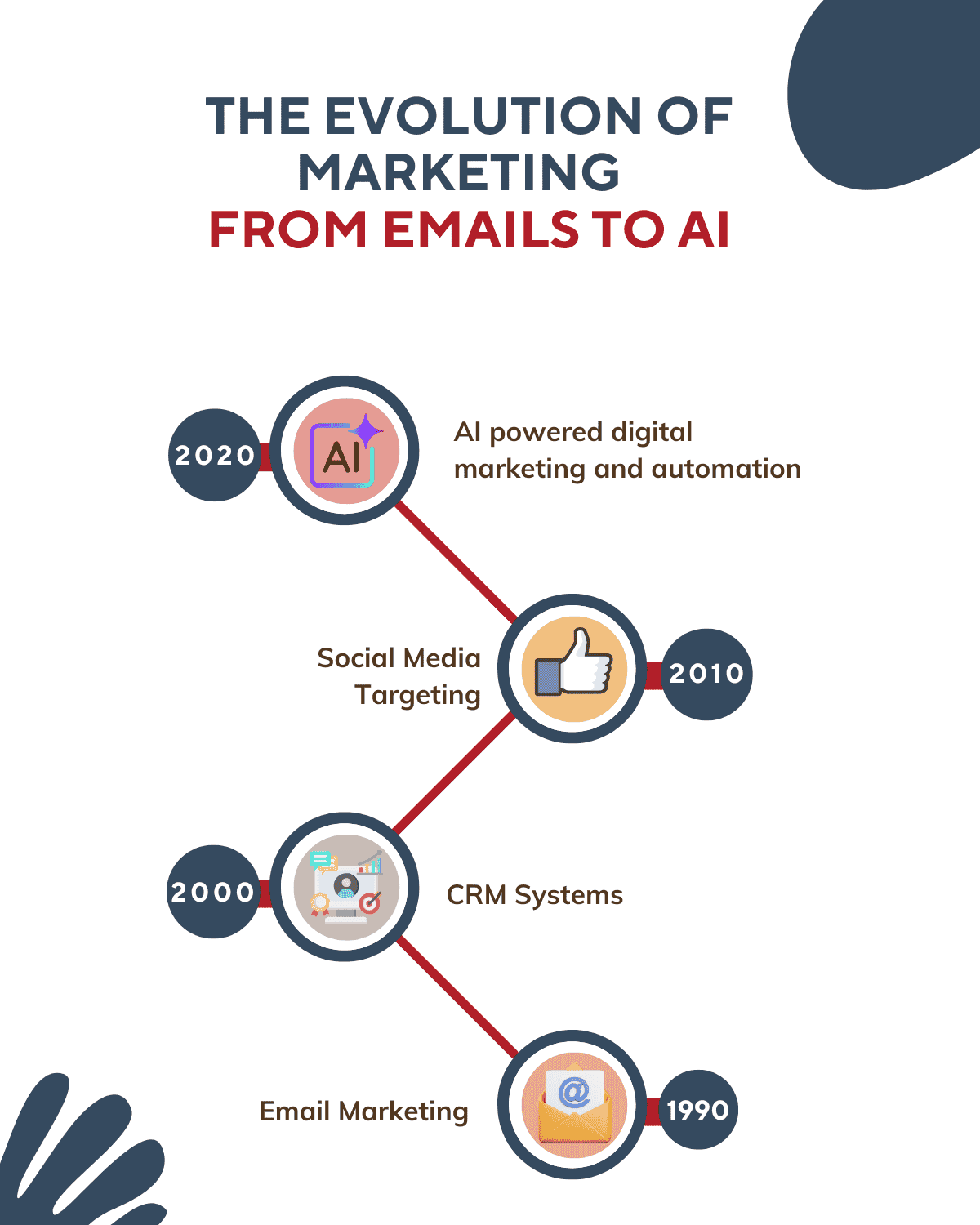
The Mass Marketing Era (Before 2000)
Before 2000, marketing used mass media like print, radio, TV, and billboards to deliver one message to all. With limited data, customer insights were minimal, focusing on creativity and broad brand awareness over personalization or targeting.
The Digital Revolution (2000–2010)
During the Digital Revolution (2000–2010), the internet enabled data collection through emails, cookies, and early CRM systems. Marketers began using personalized emails and basic segmentation, but personalization remained mostly manual and lacked automation.
The Data Explosion (2010–2020)
Between 2010 and 2020, social media, eCommerce, and smartphones produced vast user data. Marketers used analytics and platforms like Google and Facebook for precise targeting based on behavior, clicks, and purchases. Algorithms suggested relevant content, but real-time intelligence was still limited before AI-driven marketing emerged.
The AI-Powered Personalization Era (2020–Present)
Since 2020, AI has revolutionized marketing with intelligent, automated personalization. It analyzes vast data in real time to predict needs, recommend products, and optimize campaigns continuously. This era positions Aidify Learning and Mobility as a leader in adaptive, AI-driven marketing.
The Mass Marketing Era (Before 2000)
Before 2000, marketing used mass media like print, radio, TV, and billboards to deliver one message to all. With limited data, customer insights were minimal, focusing on creativity and broad brand awareness over personalisation or targeting.
The Digital Revolution (2000–2010)
During the Digital Revolution (2000–2010), the internet enabled data collection through emails, cookies, and early CRM systems. Marketers began using personalised emails and basic segmentation, but personalisation remained mostly manual and lacked automation.
The Data Explosion (2010–2020)
Between 2010 and 2020, social media, e-commerce, and smartphones produced vast user data. Marketers used analytics and platforms like Google and Facebook for precise targeting based on behaviour, clicks, and purchases. Algorithms suggested relevant content, but real-time intelligence was still limited before AI-driven marketing emerged.
The AI-Powered Personalization Era (2020–Present)
Since 2020, AI has revolutionised marketing with intelligent, automated personalisation. It analyses vast data in real time to predict needs, recommend products, and optimise campaigns continuously. This era positions Aidify Learning and Mobility as a leader in adaptive, AI-driven marketing.
Key Features of AI-Powered Personalized Marketing
1. Predictive Analytics
AI anticipates customer actions who will buy, what they’ll purchase, and when they’ll do it. Using machine learning models, AI analyses patterns in customer behaviour such as
- Browsing history
- Past purchases
- Abandoned carts
- Click paths and engagement levels
From this data, AI can forecast who is likely to buy, what they’ll buy, and when they’ll take action.
2. Dynamic Content Personalization
Dynamic content personalisation = automatically changing the content a user sees (webpages, emails, ads, push notifications, search results, etc.) in real time based on that user’s attributes, behaviour, context, or predicted intent so the experience feels uniquely relevant. AI allows marketers to move beyond generic content and deliver unique experiences to each visitor.
It does this by analysing user behaviour in real time and dynamically adjusting:
- Website banners, layouts, or product displays
- Email content and subject lines
- Ad creatives and CTAs (Calls to Action)
3. Automated Campaign Management
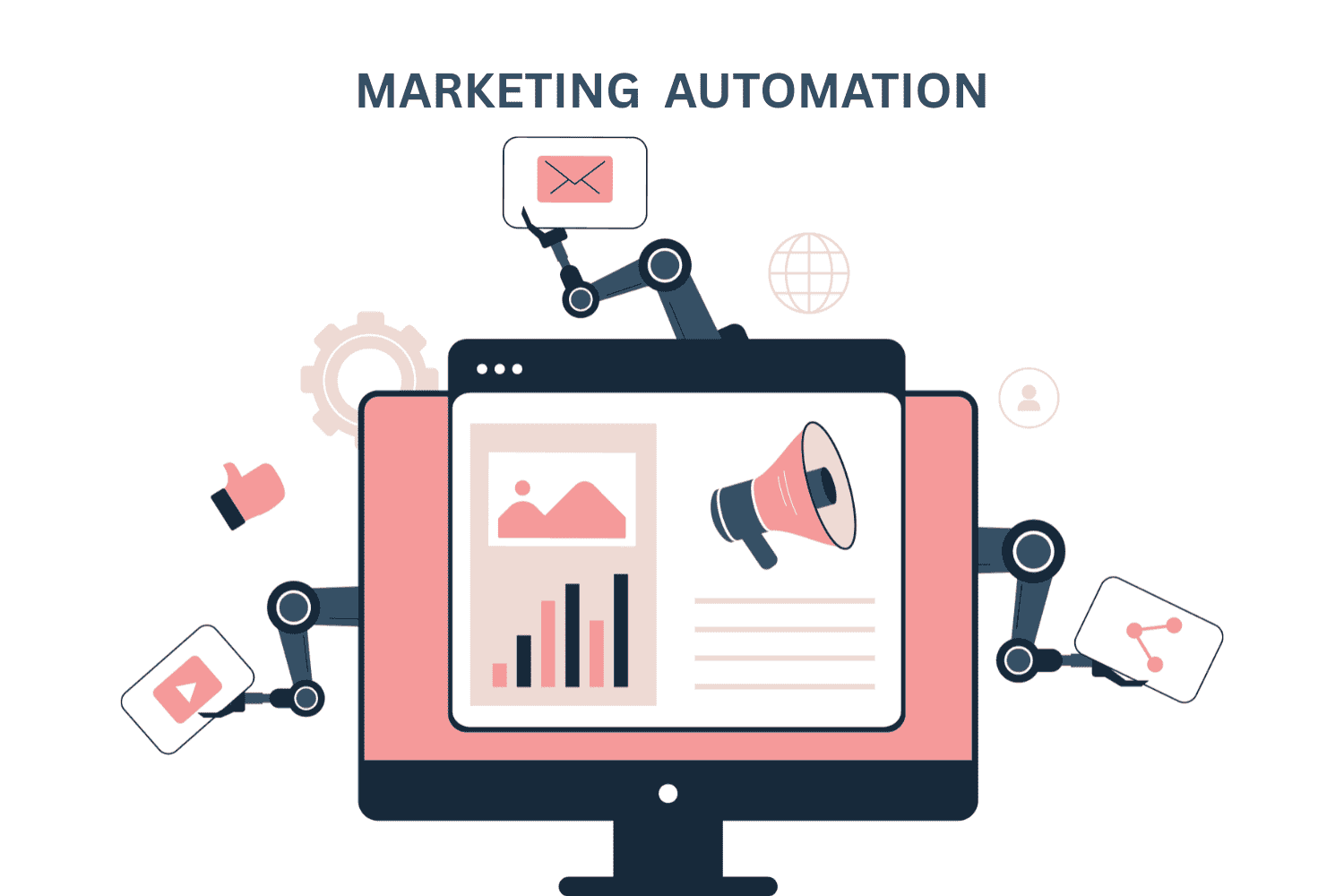
In traditional marketing, running campaigns was a time-consuming and manual process. Marketers had to plan, create, test, and monitor campaigns across different channels, email, social media, search ads, and websites, often juggling multiple tools and spreadsheets. But today, with AI-powered automated campaign management, that entire process can run intelligently on autopilot.
AI transforms campaign management from a manual, reactive task into a data-driven, self-optimising system that continuously improves performance without human micromanagement.
4. Chatbots and Conversational Marketing
In today’s digital world, customers expect instant answers, personalised experiences, and round-the-clock support. Traditional marketing which depends on delayed responses like emails or call centres often fails to meet these expectations. That’s where AI-powered chatbots and conversational marketing step in, transforming how brands communicate, sell, and build trust.
How Chatbots Power Conversational Marketing?
At the heart of conversational marketing lies the AI chatbot — an intelligent virtual assistant that can simulate human-like conversations using natural language processing (NLP) and machine learning (ML). Unlike traditional scripted bots, AI chatbots understand intent, learn from interactions, and personalise their responses based on customer data. This allows businesses to handle thousands of conversations simultaneously without compromising quality or accuracy.
5. Smart Email and Social Media Automation
In today’s fast-paced digital world, customers are constantly bombarded with marketing messages from emails and social posts to push notifications and ads. Amid all this noise, standing out requires perfect timing, relevant content, and personalised communication.
That’s exactly what AI-powered email and social media automation delivers. It enables businesses to reach every customer with the right message, at the right time, on the right platform, all without manual effort.
This is no longer about sending bulk emails or scheduling random social posts. Smart automation, driven by artificial intelligence, transforms these channels into intelligent systems that learn, predict, and adapt based on user behaviour and engagement.
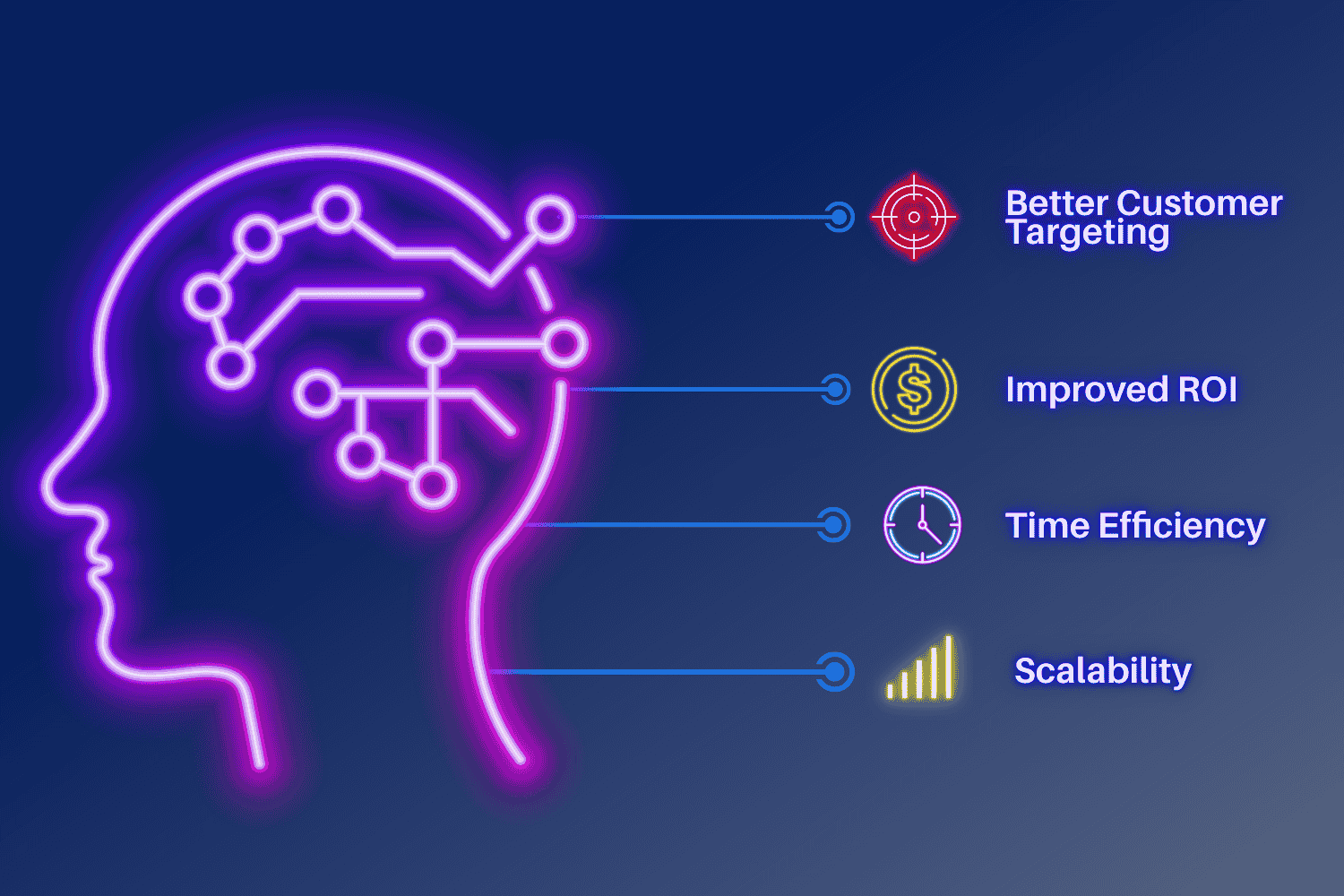
Benefits of AI-Powered Digital Marketing and Automation
| Benefit | Description |
|---|---|
| Better Customer Targeting | AI identifies high-intent audiences using behavioral data. |
| Improved ROI | Smart automation reduces waste and increases conversion rates. |
| Time Efficiency | Routine marketing tasks are automated, freeing up creative time. |
| Scalability | Personalization can reach millions of users simultaneously. |
| Real-Time Decision Making | AI reacts instantly to customer actions. |
How We Do Personalized Marketing with AI at Aidify
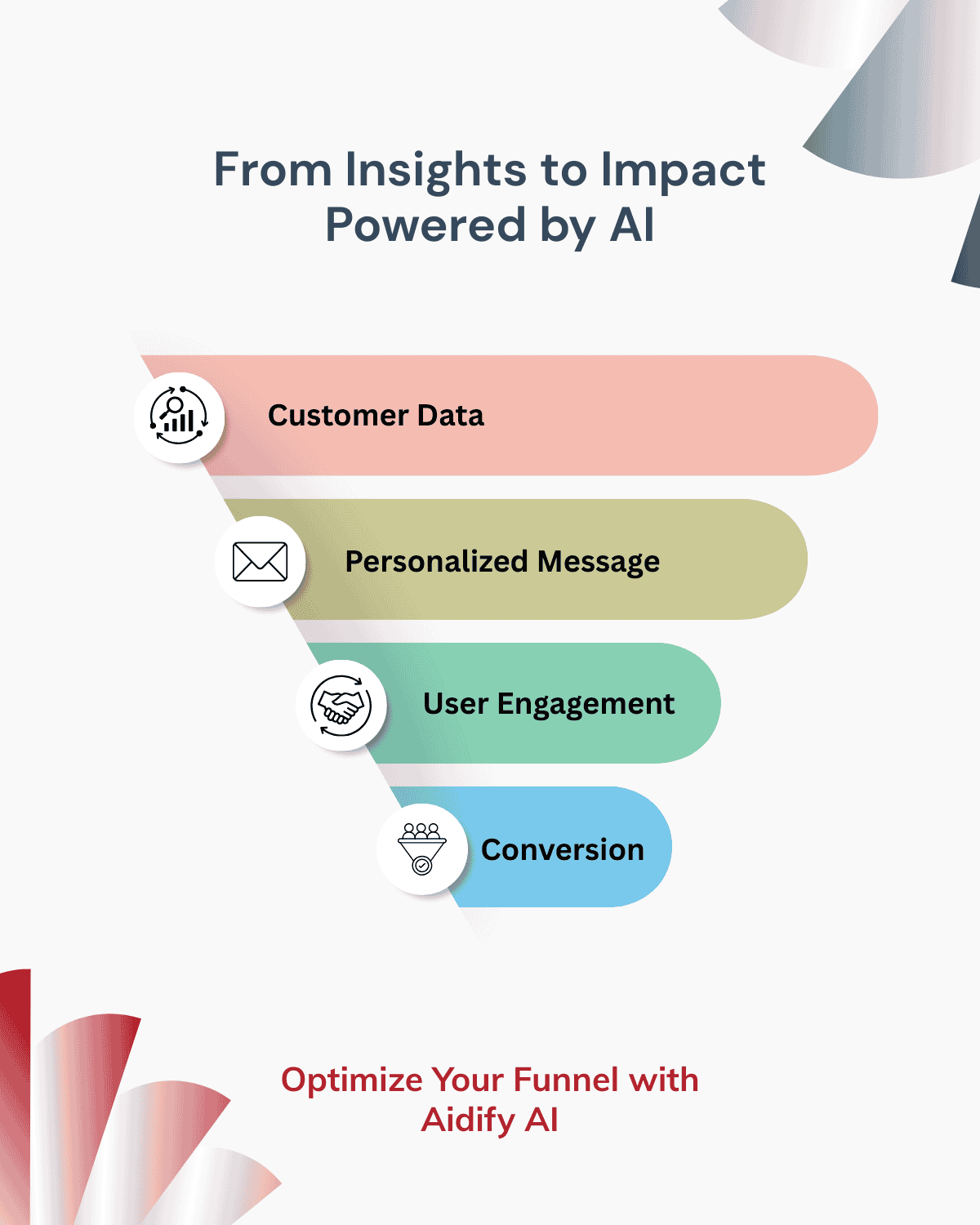
At Aidify Learning and Mobility, personalised marketing goes far beyond simple automation; it’s about using AI intelligence, behavioural insights, and real-time data to create marketing experiences that feel genuinely human.
Here’s how Aidify Learning and Mobility makes personalised marketing smarter, faster, and more effective:
1.
Data Collection & Integration
We connect all your data sources, CRM systems, websites, emails, and social media into one centralised AI-powered platform. We do this by building real-time data bridges that merge customer interactions, preferences, and purchase behaviours into a single profile.
Example: When a user signs up on your website and later interacts on social media, our AI automatically combines those records into one unified customer identity.
2.
Predictive Analytics & Intent Recognition
We use AI models to analyse browsing patterns, engagement history, and purchase intent to predict what each user will do next.
Example: If a visitor keeps returning to your pricing page, our AI automatically triggers a personalised offer or chatbot message encouraging conversion.
3.
Dynamic Content Personalization
At Aidify Learning and Mobility, our AI engine intelligently adapts website layouts, visuals, CTAs, and product recommendations based on real-time customer behaviour. It studies browsing history, engagement time, and past interactions to deliver hyper-relevant experiences to each user. This ensures that every touchpoint, from emails to ads, feels personally crafted and timely. With Aidify Learning and Mobility, businesses can deliver meaningful, data-driven engagement that drives higher retention and conversions.
Example: We personalise website banners and email templates so a visitor exploring fitness gear sees activewear promotions, while another browsing gadgets sees tech recommendations.
4.
Automated Campaign Optimization
We monitor campaign performance continuously and use machine learning to adjust targeting, ad spend, and creative assets automatically.
Example: If one version of an ad performs better, our AI shifts more budget toward it instantly without waiting for manual input.
5.
Conversational AI & Chatbots
We design AI chatbots that act as personalised sales assistants, capable of handling thousands of customer queries instantly.
Example: When a visitor asks about pricing or availability, our chatbot responds in seconds with context-aware recommendations or links.
6.
Data Privacy & Compliance
We make privacy a top priority. All personalisation at Aidify Learning and Mobility follows global data laws like GDPR and India’s DPDP Act.
Example: We use consent-based tracking and anonymised IDs to ensure users stay protected while enjoying relevant experiences.
7.
Actionable Insights & Real-Time Dashboard
We translate complex data into visual dashboards showing which campaigns, audiences, or messages deliver the best results.
Example: If engagement dips in one campaign, our dashboard flags it and suggests AI-driven fixes like new timing or audience refinement.
The Aidify Advantage
By combining AI-powered analytics, intelligent automation, and continuous optimisation, Aidify Learning and Mobility helps brands move from data to decisions and from engagement to conversion effortlessly.
The Future of AI-Driven Personalization
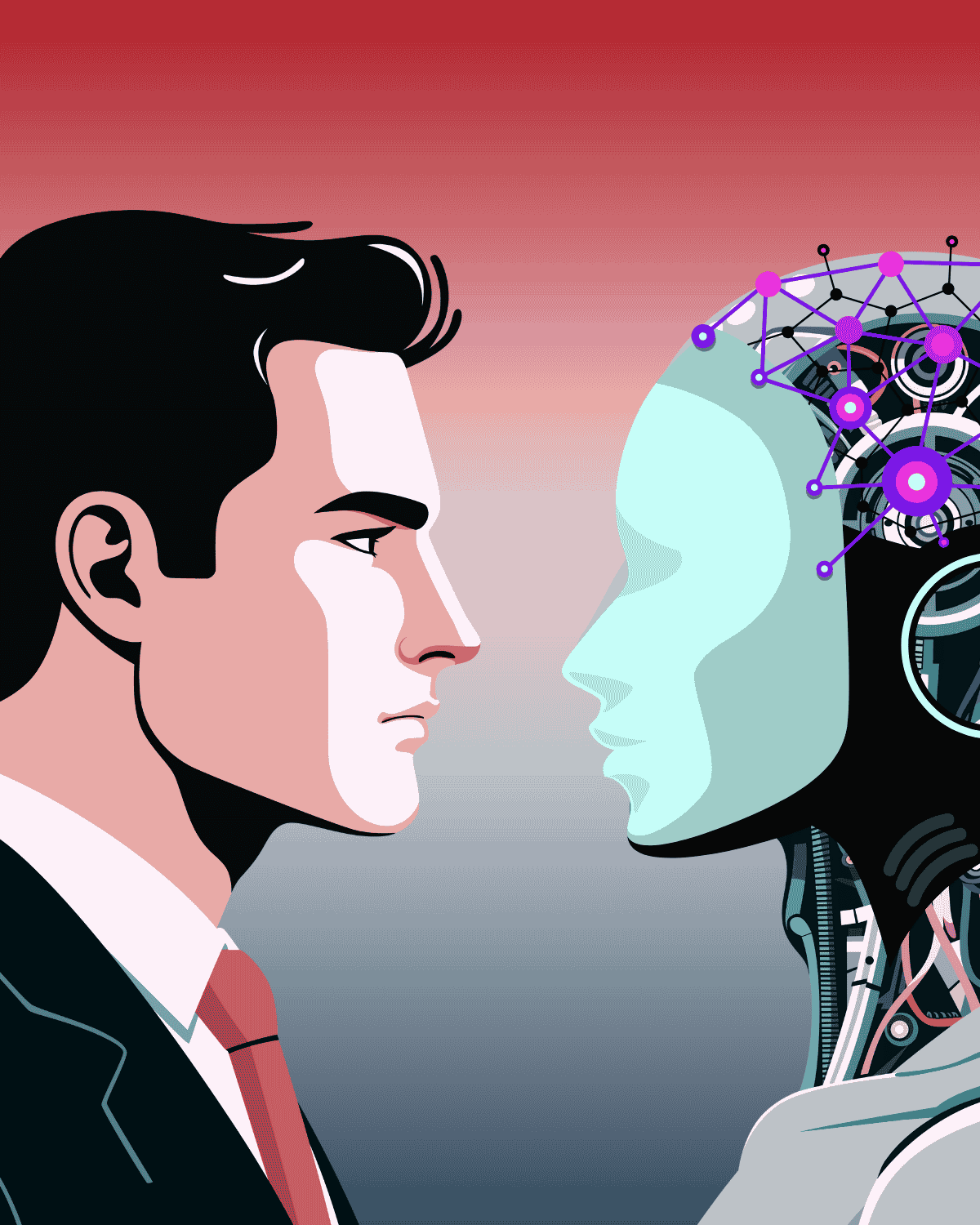
As technology evolves, we’re stepping into an era where personalisation won’t just mean showing the right product or ad it will mean anticipating emotions, understanding context, and adapting experiences instantly. Artificial Intelligence (AI) is at the centre of this transformation. What began as simple recommendation engines and automated emails is rapidly evolving into emotion-aware, voice-driven, and context-intelligent marketing ecosystems that feel deeply human, even though they’re powered by machines.
The next phase of AI-driven personalisation will blur the boundaries between creativity and computation, creating customer experiences that are not only data-informed but also emotionally intelligent.
In the near future, AI will take personalisation to new heights.
We’ll see:
- Voice-based personalized ads.
- Emotion-aware marketing content.
- Real-time customization across every device.
AI will blur the line between creativity and computation, enabling brands to offer experiences that feel human, but are powered by advanced automation.
Conclusion
From print ads to predictive algorithms, marketing has come a long way. Today, AI-powered digital marketing and automation led by innovators like Aidify Learning and Mobility is not just a tool but the foundation of personalised customer engagement. By turning raw data into actionable insights, Aidify Pvt Ltd empowers brands to connect deeper, sell smarter, and grow faster.