Introduction
AI-Generated Insights: How Business Leaders Can Make Data-Driven Decisions. In today’s hyper-digital and competitive business environment, leaders can no longer rely solely on instinct or experience to make critical decisions. The world now runs on data, and the organisations that harness it effectively are the ones leading their industries. Artificial Intelligence (AI) has become the key that unlocks the power of this data, turning raw information into actionable insights. This transformation has given rise to what experts call an AI strategy for business, a structured approach to integrating AI tools, analytics, and automation into decision-making. With AI-generated insights, leaders are not only reacting to change but anticipating it, making faster, smarter, and more confident decisions. Aidify Learning and Mobility helps businesses embrace this shift by transforming data into intelligent, results-driven action.
- Data-Driven Decision Making
- AI as a Key Enabler
- Structured AI Strategy
- Business Transformation
- Proactive Decision-Making
The evolution of decision-making: from instinct to intelligence
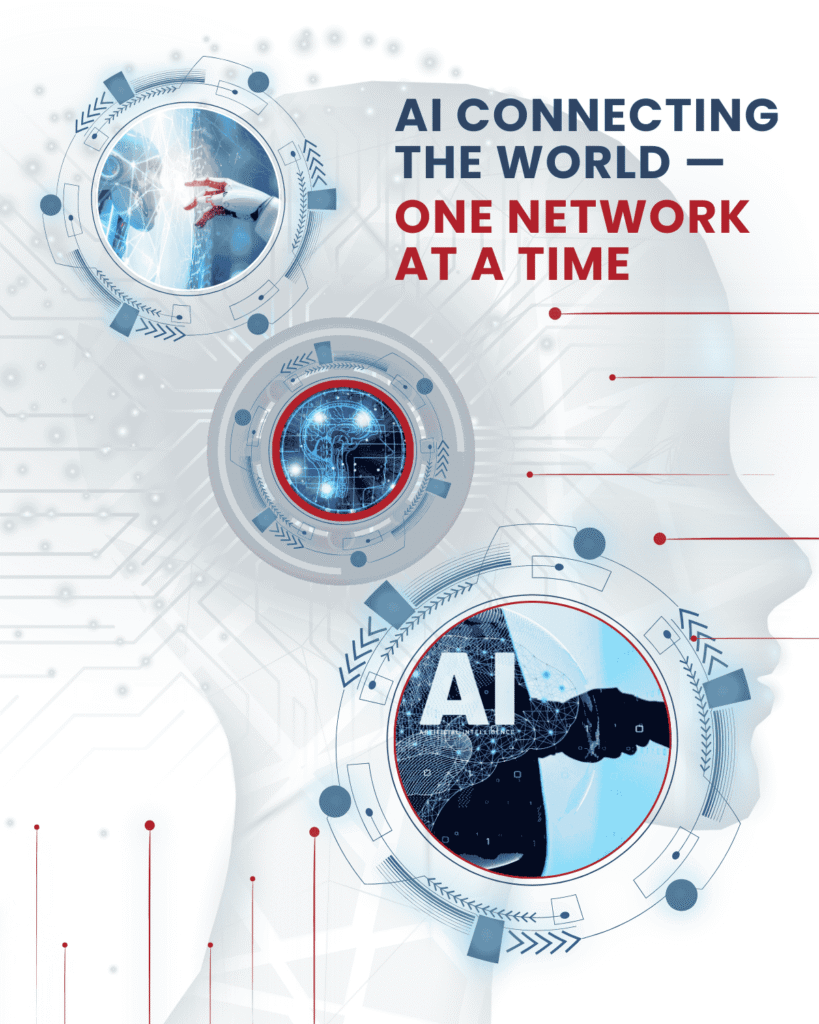
Business decision-making has evolved dramatically from intuition and experience to data-driven intelligence. Earlier, leaders relied on observation and delayed feedback. The digital era introduced vast amounts of data, but it was fragmented and difficult to analyse. The 2000s brought analytics through spreadsheets and dashboards, yet still required manual interpretation. Today, AI has transformed this process by interpreting data, learning from it, and predicting outcomes. With a strong AI strategy, businesses move beyond using data for insights to making intelligent, accurate, and fast decisions that drive leadership, strategy, and innovation.
Understanding AI strategy for business
In today’s hyper-competitive digital world, data is the new fuel, and Artificial Intelligence (AI) is the engine that converts this fuel into power. But having AI tools alone isn’t enough; organisations need a clear, structured AI strategy for business. This strategy acts as a roadmap that aligns AI technologies with overall business goals, ensuring that every algorithm, model, and data insight contributes directly to growth, innovation, and efficiency. Through its advanced AI solutions, Aidify Learning and Mobility helps companies design and implement these strategies effectively.
What is an AI strategy for business?
An AI strategy for business is a long-term plan that defines how a company will use AI to improve operations, enhance decision-making, and create value for customers. It covers everything from identifying business problems AI can solve to selecting the right technologies, managing data, training teams, and measuring
success. Think of it like a digital transformation blueprint. Without a strategy, AI adoption can become random, leading to wasted investments, poor data management, and minimal ROI. A strong AI strategy ensures that the use of AI is purposeful, ethical, and scalable across departments.

The role of AI-generated insights in modern leadership
AI-generated insights go far beyond traditional reporting. Instead of providing static charts or metrics, AI continuously analyses streams of information, customer interactions, financial records, employee performance, and market movements to identify patterns and correlations that humans might overlook. With real-time dashboards and predictive analytics, Aidify Learning and Mobility empowers business leaders to make evidence-based decisions faster, reducing risk and maximising opportunity.
For example, AI can help a retail executive spot next-season trending products, assist a financial leader in predicting market shifts, or alert manufacturers to potential equipment failures, saving millions in downtime. These insights give leaders a competitive edge, enabling proactive decisions aligned with current realities and future possibilities.
With a robust AI strategy, decision-making becomes dynamic, data-rich, and highly personalised. Leaders can simulate scenarios adjusting pricing, marketing, or logistics and instantly see predicted outcomes, allowing organisations to minimise risk, optimise resources, and seize opportunities ahead of competitors.
95%
Smart Decisions
80%
Market Insights
70%
Resource Optimized
90%
Colors
Core components of an AI strategy for business
An effective AI strategy helps businesses align technology with their goals. It focuses on data, tools, talent, and ethical practices to drive real results. With the right plan, AI can boost efficiency, innovation, and decision-making.
- 200% more amet dolor lacinia tempor
- Vestibulum posuere cubilia
- Curabitur aliquam dolor at bibendum
- +150 dolor laciniarci
- Donec quis diam felis
Goal Alignment
Every AI journey begins with a clear purpose. Define what you want AI to achieve from boosting sales to improving customer experience. Each goal should directly connect to measurable business results.
Data Management
AI thrives on high-quality, well-organized data. Build reliable systems for collecting, storing, and cleaning information. Ensure data accuracy, accessibility, and compliance with privacy laws.
Tool Selection
Choose AI technologies that align with your goals and industry needs. Options include machine learning, chatbots, or predictive analytics. Focus on solutions that deliver value while fitting your budget.
Team Skills
A strong AI strategy needs skilled and collaborative teams. Invest in upskilling employees and hiring AI specialists. Encourage innovation and teamwork between technical and business experts.
Ethical AI
Trust is key to successful AI adoption. Ensure your AI systems are fair, unbiased, and privacy-focused. Make every AI-driven decision explainable and transparent to users.
Integration
AI transforms how businesses operate and make decisions. Prepare your teams through clear communication and training. Integrate AI gradually to ensure smooth adoption across workflows.
How AI generates insights for business leaders
A robust AI strategy makes business decision-making dynamic, data-driven, and personalised. Leaders can simulate scenarios, adjusting pricing, marketing, or logistics and instantly view predicted outcomes. By combining machine learning, big data, and automation, AI continuously analyses massive datasets in real time to uncover hidden patterns, predict trends, and detect risks. Through predictive modelling and analytics, it transforms complex information into clear, actionable insights, empowering leaders to make confident, data-backed decisions.
- Predicts trends, risks, and opportunities in real time.
- Transforms data into clear, actionable insights.
- Empowers faster, smarter decision-making.
- Enhances strategy across marketing, finance, and HR.
How business leaders can make data driven decisions
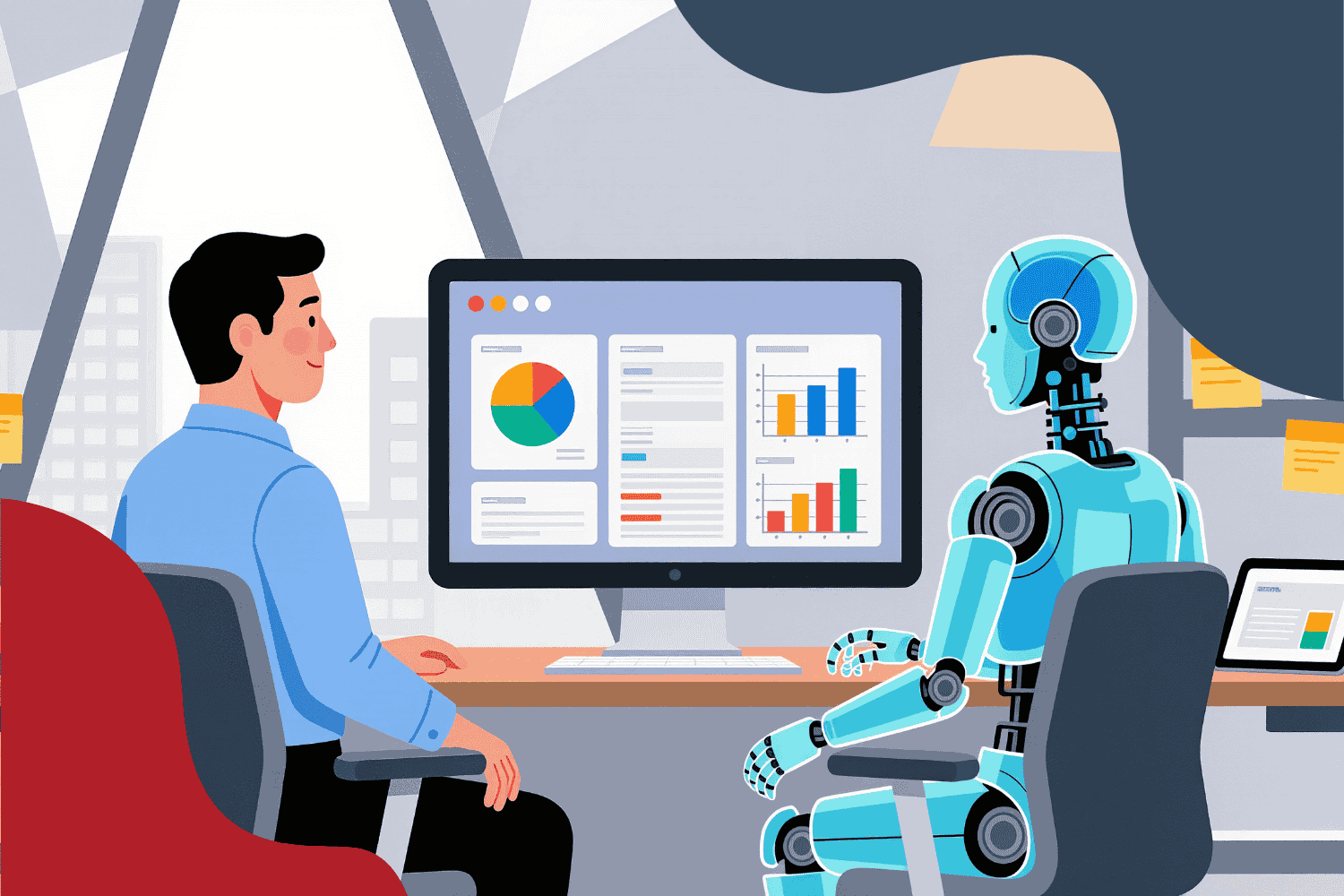
Making data-driven decisions means using facts, trends, and insights rather than assumptions or instincts. For leaders, this begins with building a culture that values data accessibility and transparency across departments. The first step is to implement data collection systems that gather information from multiple sources customer interactions, sales channels, operations, and even social media. Once the data ecosystem is in place, AI tools can start analyzing it to uncover meaningful trends.
An effective AI strategy for business involves aligning AI systems with the company’s goals. For example, a retail company may use AI to optimize pricing, while a healthcare organization might rely on it to predict patient outcomes. Business leaders must learn to ask the right questions: What are our customers really looking for? Which product line is underperforming and why? How can we forecast demand more accurately? With AI-generated insights, these questions can be answered instantly with precision, enabling leaders to make strategic decisions that are proactive rather than reactive.Moreover, AI helps eliminate human bias from decision-making. Instead of relying on personal opinions or incomplete data, AI bases its recommendations on evidence and statistical accuracy. This ensures that decisions are fair, efficient, and aligned with organizational objectives.
Our working process
Building an AI strategy isn’t just about technology it’s a leadership exercise. Here’s how business leaders can get started:
1.
Assess Current Capabilities
Start by evaluating your organisation’s existing data, tools, and skill sets. Identify strengths and gaps in technology, processes, and talent. This foundation helps shape realistic goals for your AI journey.
2.
Define Clear Use Case
Focus on real business problems AI can solve effectively. Examples include reducing customer churn, predicting demand, or automating tasks. Clear use cases ensure AI investments deliver measurable results.
3.
Build Data Foundations
AI relies on clean, organised, and accessible data. Develop a centralised data system that integrates information from all sources. High-quality data ensures accurate insights and reliable AI outcomes.
4.
Select the Right AI Tools
Choose platforms like AWS AI, Google Cloud AI, or Microsoft Azure wisely. Evaluate each for scalability, compatibility, and cost-effectiveness. The right tools empower faster deployment and smoother integration.
5.
Train and Upskill Employees
Equip teams with the knowledge to use and interpret AI insights. Offer workshops, certifications, and real-world projects for hands-on learning. An AI-literate workforce turns data into meaningful business actions.
6.
Start Small, Scale Fast
Begin with pilot projects to test feasibility and value. Analyse early results to identify what works best for your organisation. Once proven, scale AI solutions across departments for greater impact.
7.
Monitor and Optimize
AI strategies must evolve as business goals and technology change. Track performance, accuracy, and ROI regularly. Continuous monitoring ensures lasting success and innovation.
Challenges in implementing AI-driven decision systems
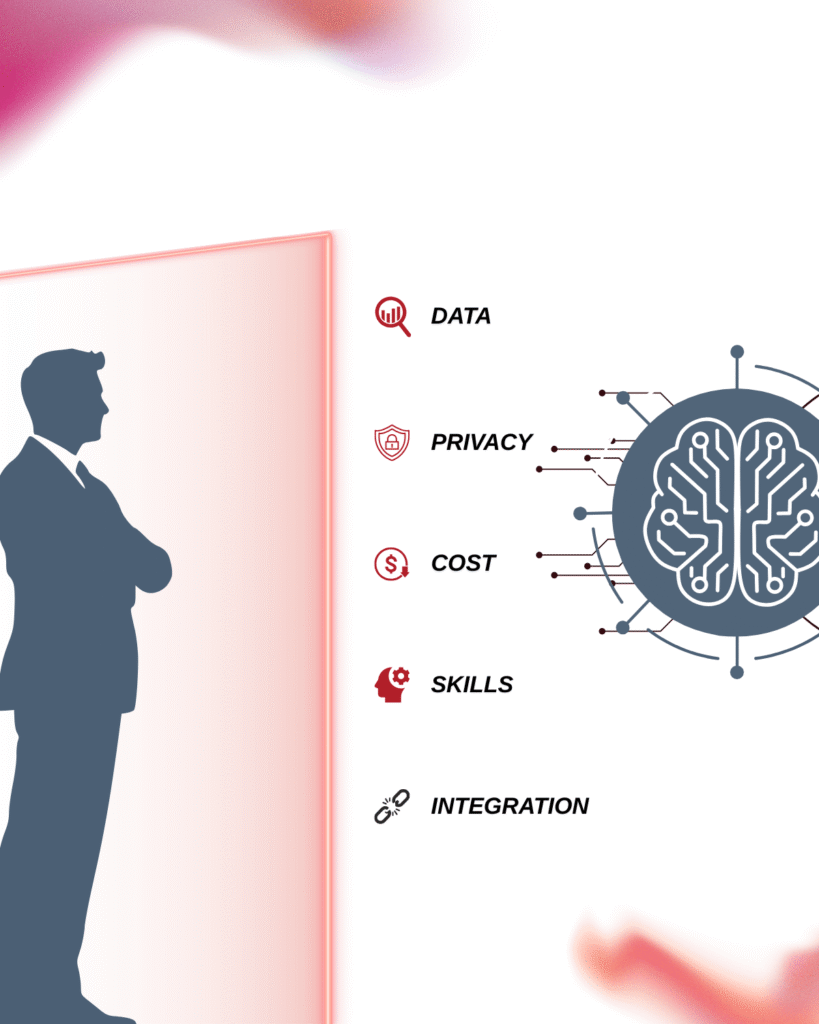
Despite its benefits, integrating AI into leadership decision-making presents challenges. Many organisations face fragmented data, outdated systems, and resistance to technological change. Data privacy, security, and ethical use are also major concerns, requiring leaders to ensure AI tools are transparent, accountable, and trained on unbiased data. An effective AI strategy must include governance frameworks that promote responsible and ethical use. Another key challenge is developing data literacy among leadership teams. Executives must know how to interpret AI insights, question algorithms, and validate results. True data-driven leadership emerges from collaboration between human intelligence and artificial intelligence.

The future of AI-driven decision-making
The future of business leadership will be defined by how effectively organisations use AI to shape decisions. AI will evolve into a true “co-pilot,” capable of understanding language, interpreting emotions, and delivering instant insights. Generative AI will transform decision-making by creating real-time reports, predictive models, and strategic recommendations, helping leaders make faster, data-driven choices.
A successful AI strategy will emphasise adaptability as much as efficiency. With markets shifting rapidly and data growing exponentially, organisations that adopt adaptive AI models able to learn and evolve continuously will maintain a strong competitive edge in an ever-changing business landscape.
How aidify learning and mobility empowers
businesses with AI-generated insights
At Aidify Learning and Mobility, we help organisations bridge the gap between data and decision-making through intelligent AI-driven solutions. Our goal is to make AI-generated insights accessible, actionable, and aligned with each client’s business strategy, transforming complex datasets into clear growth opportunities.
Here’s how we do it:
Custom AI Insight Platforms
We design and deploy custom AI analytics dashboards that provide business leaders with real-time insights into performance, market trends, and customer behaviour.
Example: A retail client used our AI platform to analyse seasonal buying patterns, enabling them to optimise inventory and increase sales by 27% during peak months.
1.
2.
Predictive Intelligence for Smarter Decisions
Our predictive AI models help organisations anticipate what’s coming next from demand surges to financial risks.
Example: Aidify’s forecasting solution helped a logistics company reduce downtime by predicting vehicle maintenance needs before breakdowns occurred.
Data Integration and Automation
We connect data from multiple business systems, CRM, ERP, HR, and marketing tools into one unified AI ecosystem. This allows leaders to make data-driven decisions faster, with no manual data crunching.
Example: One of our enterprise clients automated their sales reporting process using Aidify’s AI-driven data pipelines, saving over 40 hours per month in manual analysis.
3.
4.
AI-Powered Learning for Leadership Teams
At Aidify Learning and Mobility, we believe that AI transformation begins with people. Our AI learning programs empower leadership teams to understand and trust AI-generated insights.
We provide hands-on workshops and interactive modules that help decision-makers interpret AI dashboards, question algorithms, and build confidence in using AI as a strategic co-pilot.
Ethical and Transparent AI Systems
We prioritise ethical AI deployment, ensuring that all AI insights are transparent, bias-free, and explainable. Aidify builds trust by ensuring every model can clearly show how and why a decision or prediction was made.
5.
6.
Continuous Optimization and Support
AI is not a one-time implementation; it evolves. Aidify continuously monitors model performance, retrains algorithms, and updates strategies based on business changes.
Example: For a financial client, our adaptive AI framework refined itself over time, improving forecast accuracy by 35% and identifying new market opportunities automatically.
Conclusion
AI-generated insights represent the future of intelligent decision-making. They empower leaders to transform uncertainty into opportunity, turning complex datasets into clear, actionable strategies. By developing a comprehensive AI strategy for business, leaders can unlock the full potential of artificial intelligence not as a tool, but as a trusted advisor in every decision they make. With partners like Aidify Learning and Mobility, organisations can lead with confidence, combining data, innovation, and intelligence to build a smarter future. In a world where data defines destiny, AI-driven leadership is not just an advantage; it’s a necessity. Those who master the art of data-driven decision-making will lead their organisations into a future defined by innovation, efficiency, and insight, where every move is guided by intelligence, not assumption.